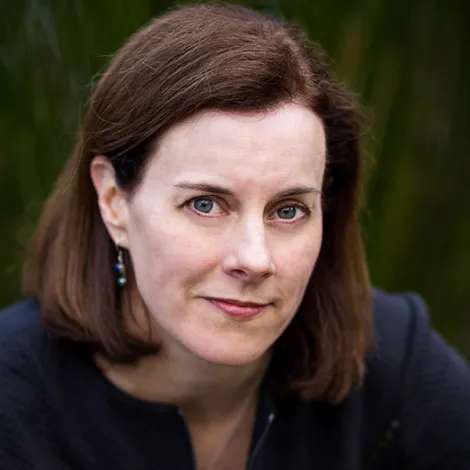
Historical Notes: An Interview with Martha Conway
Martha Conway’s novel We Meet Apart combines historical fiction with elements of magical realism and is set in Ireland during World War II. Her earlier books include The Underground River, a New York Times Book Editor’s Choice, and Thieving Forest, which won the North American Book Award for Historical Fiction. Her short fiction has appeared in The Iowa Review, Carolina Quarterly, Missouri Review, Folio, and other literary journals. She has received a California Arts Council fellowship and teaches creative writing in Stanford University’s Writing Certificate program. She lives in San Francisco.
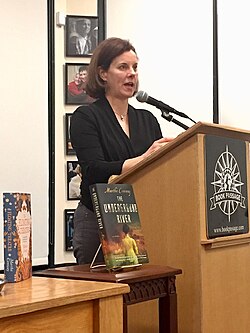
The novel We Meet Apart has received strong attention since publication. How did it come to be published with Regal House?
Martha Conway: I’m very happy to be working with Regal House. Their books are consistently engaging, well written, and often surprising. Because We Meet Apart includes elements of magical realism, it felt like a natural fit. They are open to fiction that goes beyond strict realism.
With a background in history and English, does a novel usually begin with a setting, or something else?
Martha Conway: It usually begins with a character in a specific situation. The time period and setting develop alongside that character almost immediately. For example, when I explored an American woman trying to become a doctor, I focused on a historical moment when that goal was difficult but still possible.
Your novels often involve extensive historical research. How does that process work, and did it influence We Meet Apart?
Martha Conway: I do a lot of research before writing, and it often shapes the story itself. The idea for the novel began with a character and her struggles, but research changed its direction significantly. I came across information about a detailed Nazi plan to invade Ireland during World War II, which was never carried out. That idea led me to imagine an alternate-history version of Ireland under occupation, which allowed me to explore themes like safety, identity, and loss in a different way.
Has your process changed over time, or does each novel still feel like starting from zero?
Martha Conway: Every novel feels like starting over. I often think about how I managed the previous one. The structure is similar—I begin with a character who has strong desires and I know where they end up—but the path between those points changes every time.
You began with short fiction. Do you still write stories while working on novels?
Martha Conway: I started with short stories before novels. I can only work on them when I’m not writing a novel, because the forms require different approaches. Short fiction is more concentrated and demands attention to each sentence. I enjoy that intensity, but I keep it separate from novel writing.
What does your writing routine look like, and what part of the process is most difficult?
Martha Conway: I write on weekdays from about 9 a.m. until noon or early afternoon. In a first draft, I aim for at least 500 words per session, which helps push scenes forward. I usually begin with a loose outline, but it changes a lot as I go. Writing itself is the most enjoyable part, while the first draft is the hardest.
You also teach creative writing. Does teaching influence your own work?
Martha Conway: Teaching is very inspiring. My students are extremely creative and surprising. During the academic term, it’s harder to focus on first drafts, so I tend to work more on revisions. But creative work doesn’t always follow a fixed schedule.
What are you working on next?
Martha Conway: I continue to write about strong-minded women. My next novel is set in New England in 1820 and focuses on a woman without power trying to protect her family and figure out how much control she can truly have over her life.
Other Articles

The Day I Almost Gave Up on Writing