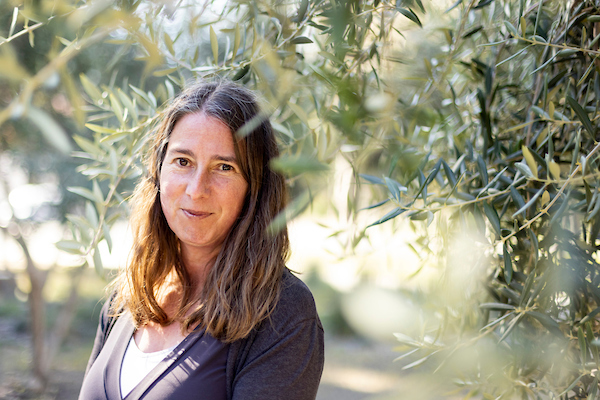
Sweet Spots: An Interview with Kim Magowan
Kim Magowan lives in San Francisco and teaches in the English Department of Mills College at Northeastern University. She is the author of several works of fiction, including the short story collection The Last Day (2026), the co-authored collection Don’t Take This the Wrong Way (2025), How Far I’ve Come (2022), the novel The Light Source (2019), and the short story collection Undoing (2018), which received a major fiction award. Her stories have appeared in numerous respected literary journals and have been recognized in major annual short fiction selections. She also serves as editor-in-chief and fiction editor of a literary magazine focused on contemporary short fiction.
Interview
Congratulations on The Last Day. How did this collection find its way to publication?
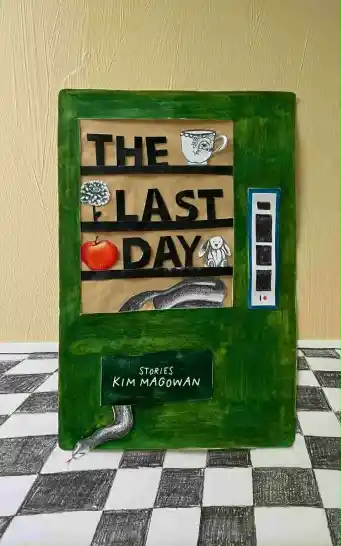
Thank you. I’m genuinely excited about how this book came together. The press has a strong reputation for publishing unusual and well-crafted fiction, which made it a natural fit for this work, especially since the collection includes elements that lean into the unexpected and slightly surreal.
My relationship with the publisher goes back to my earlier collection. Over time, it became a place where I could share early drafts of new work and receive thoughtful editorial feedback. At one point, I sent a manuscript in progress simply expecting notes and revision suggestions. I had no idea it would eventually be considered for publication. The idea of publishing it as part of an editorial selection was a surprise and emerged from that ongoing creative exchange.
Has this been a particularly productive period for you as a writer?
Yes, very much so. I’ve become more confident in my writing process and less prone to overthinking early drafts. My first collection took decades to complete, though the majority of the stories were written within a more concentrated period later on. Most of the stories in the current book were written after my previous collection was published.
I also came into publishing relatively late in life, which changed my relationship with time. There’s a certain urgency that comes with that awareness, a feeling of catching up. At the same time, I’ve learned to trust the momentum of the work itself rather than forcing it into a rigid schedule.
Many of your stories are very short. How do you decide on length and form?
I’ve become increasingly drawn to flash fiction. If you look across my books, the average length of stories keeps decreasing. Some pieces are deliberately written as micro-fiction, while others evolve unexpectedly.
What often happens is that I think I’m writing something longer, but at some point a sentence arrives that feels like an ending. Other times I assume a story will be brief, but it expands because something essential is missing.
The process is very organic. Even when I start with a sense of structure, the story often overrides my expectations and decides its own form.
What does your writing process look like on a practical level?
A lot of my early drafts come from timed writing sessions with other writers. We exchange prompts at regular intervals and write continuously over several hours. These sessions produce rough but energetic drafts that often surprise me later.
I also gather material constantly from daily life—things I notice on walks, fragments of conversations, or ideas that appear unexpectedly. Dreams also play a role in generating fragments of stories.
Some exercises or structured prompts have been especially useful in pushing me toward forms or metaphors I wouldn’t normally choose. I tend to work best when there is a constraint or an unusual starting point.
Does editorial work influence your own writing?
It influences my awareness more than my practice. Reading a large volume of submissions gives me a sense of recurring themes and cultural patterns in contemporary fiction. I see certain topics appearing repeatedly across many writers, especially in response to current global and political concerns.
That awareness makes me more cautious about repetition in my own work. If I approach a familiar subject, I want to ensure I’m offering something that feels original rather than simply echoing what is already being widely written.
Has collaboration with other writers changed your process?
Working closely with another writer has had a significant impact, particularly in terms of revision speed and confidence. Having a trusted first reader changes how long I sit with a draft before moving forward.
Earlier in my career, I would revise endlessly in isolation. Now I tend to share work earlier, incorporate feedback, and move toward submission more efficiently. It has also influenced the tone of my writing, making it more direct and, in some cases, more humorous.
How do you approach structuring a story collection?
Structuring a collection is one of the most challenging parts of the entire process. With a large number of stories, organization becomes essential to prevent the book from feeling overwhelming.
I went through several versions of structure before arriving at the final one. Early attempts were overly conceptual and did not hold together well. Eventually, I moved toward a thematic organization that grouped stories around relationships: partners, friends, family, and the self.
Even that structure evolved during editing. Some stories were moved to the beginning or end based on how they interacted with the overall rhythm of the book. The opening and closing pieces were chosen carefully to create a sense of framing, especially around themes of endings and transitions.
Do you ever change point of view after writing a story?
I almost never change point of view after the fact. For me, point of view is part of the initial conception of the story.
Each perspective serves a different function. First-person tends to focus on voice and immediacy. Third-person allows for more stylistic flexibility and distance. Second-person creates direct pressure on the reader, while first-person plural introduces a sense of collective identity or shared responsibility.
Because each POV carries a distinct effect, I choose it at the beginning rather than treating it as something adjustable later.
What role does form play in your writing?
Form is integral from the start. I rarely impose structure onto a finished draft; instead, form emerges alongside content.
Some stories begin with a specific structure in mind, such as email formats or questionnaire-style narratives. These forms are not decorative—they shape how the story thinks. In many cases, the form determines what the story is capable of expressing.
Short forms like email or fragmented documents are especially useful because they naturally encourage brevity, immediacy, and emotional impulse.
Why do many of your characters remain unnamed?
There are several reasons. Sometimes naming feels unnecessary if the character’s identity is already clear through context. In other cases, leaving a character unnamed turns them into a more general figure or archetype.
Occasionally, anonymity reflects a closer emotional proximity to the narrator, where naming would feel artificial. In some autobiographical work, avoiding names creates a sense of honesty rather than distancing.
At the same time, names are meaningful when they are used. When a character is named, it is usually intentional and significant.
What are you working on now?
I’m currently working on a new collection of short fiction, mostly flash pieces. It is still in development and roughly halfway complete. Once it reaches a certain size, I’ll begin shaping it more deliberately—editing, removing weaker pieces, and refining structure.
At this stage, I don’t feel any pressure to turn it into a novel. If anything, I suspect my future work will continue in the direction of interconnected short forms rather than traditional long-form fiction.
Other Articles
Have a Blessed Day, Sweetheart