Powerful Personification Examples That Bring Stories to Life
Personification is one of the simplest, yet most powerful tools in writing. It means giving human qualities — like thoughts, emotions, intentions, or even personality — to things that aren’t human. Through it, the non-human world suddenly feels alive: the wind whispers secrets, the sun smiles down, time refuses to wait, and shadows seem to watch us.
It’s a technique that doesn’t just decorate language — it transforms it. It turns description into experience.
In this article, we’ll explore how personification works across different contexts and why it makes writing feel more vivid, emotional, and immersive.
Let’s begin — because, as writers often say, time waits for no one.

Personification of Nature and Weather
Nature is one of the most common subjects for personification in literature. Writers often give weather and landscapes human-like behavior to make scenes more emotional and atmospheric.
Instead of describing nature as passive, they turn it into something with intent:
- The thunder doesn’t just sound — it roars through the sky.
- The wind doesn’t just blow — it howls through empty streets.
- The sea doesn’t just move — it devours the shoreline.
Compare two simple sentences:
Passive: The ocean waves lap against the shore.
Active (personified): The ocean swallowed the shoreline in eager gulps.
The difference is subtle but powerful. In the second version, nature feels alive — almost hungry, almost aware.
Nature as a Mirror of Emotion
Writers often use personified nature to reflect a character’s inner state, a technique known as pathetic fallacy.
Instead of directly saying a character feels grief or fear, the environment expresses it:
As she stood frozen in shock, the sky split open and the wind screamed through the empty street.
The weather seems to react, as if the world itself cannot stay indifferent.
Nature as Symbol of Conflict
In stories like Wuthering Heights, the landscape becomes part of the emotional tension. The moors are not just scenery — they feel wild, unstable, almost hostile.
Storms don’t simply happen; they invade the story, echoing the chaos between characters and the forces that keep them apart.
Personification of Emotions
Emotions are invisible, abstract, and often hard to describe directly. That’s why writers frequently give them physical presence or agency.
Instead of saying “she felt fear,” writers might say:
- Fear crept up her spine.
- Anxiety tightened its grip around his chest.
- Grief refused to let go.
Here, emotions behave like living beings — they attack, cling, whisper, or destroy.
Emotions as Independent Characters
Some writers go even further and turn emotions into full characters. A famous example is Inside Out, where feelings like Joy, Sadness, and Anger literally exist inside the human mind, influencing decisions like real individuals.
In poetry, Emily Dickinson does something similar:
“Hope” is the thing with feathers
That perches in the soul…
Hope becomes a small creature that lives inside a person and continues singing even in hardship.
Personification of Abstract Ideas
Big concepts like time, fate, justice, or death are often personified because they’re otherwise impossible to grasp emotionally.
- Justice finally catches up.
- Fate knocks at the door.
- Fortune smiles on the lucky.
Among them, time is one of the most powerful examples.
Time as a Living Force
Time is rarely neutral in literature. It becomes something relentless, even cruel:
- Time steals youth.
- Time devours memory.
- Time refuses to slow down.
In songs like Time Waits for No One, time is almost an enemy — unstoppable, indifferent, and absolute.
In Alice’s Adventures in Wonderland, time is even more surreal: a temperamental figure who can be argued with, offended, or “punished,” explaining why the Mad Hatter is trapped in an endless tea party.
Personification of Death
Few ideas are personified as often as death. Giving death a human shape makes it easier to understand — and paradoxically, more unsettling.
Instead of an abstract end, death becomes someone who arrives:
- Death waited silently in the shadows.
- Death came gently for him at night.
- Death offered no escape.
In The Book Thief, Death is even the narrator, observing human life with a strange mix of detachment and curiosity.
In poetry like Dickinson’s Because I could not stop for Death, death becomes a calm companion guiding the speaker into eternity.
Personification of Animals
Animals naturally sit between human and non-human, which makes them perfect candidates for personification.
In fables like Aesop’s stories, animals speak, plan, and make moral choices:
- The tortoise becomes patient and wise.
- The hare becomes arrogant and careless.
In Animal Farm, animals become political symbols, reflecting human systems of power and corruption.
Even in modern stories like Zootopia or The Lion King, animal societies mirror human struggles — prejudice, leadership, and responsibility — in a way that feels both entertaining and deeply recognizable.
Personification of Technology and Objects
Modern writing often extends personification to machines and everyday objects:
- The engine coughs to life.
- The computer refuses to cooperate.
- The algorithm decides what we see.
In science fiction, this becomes even more extreme. AI systems like HAL 9000 in 2001: A Space Odyssey behave as if they have intention, logic, and emotion — blurring the line between tool and character.
Even in daily speech, we naturally do this without noticing.
Personification of the Human Body
Writers also give human body parts their own will:
- My stomach protested.
- Her legs refused to move.
- His heart leapt before he could think.
This makes internal experience external — something the reader can feel rather than simply understand.
Personification of Everyday Objects
Even the most ordinary objects can become alive through language:
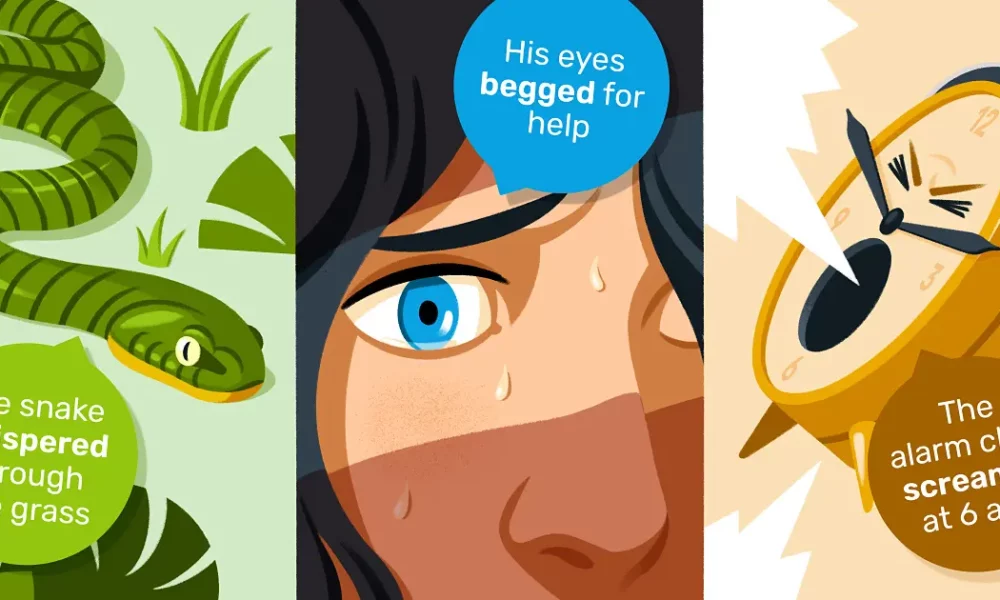
- The alarm clock screamed at dawn.
- The old house groaned under the wind.
- The car complained up the hill.
These small choices instantly make scenes more atmospheric and emotionally textured.
In gothic stories like The Haunting of Hill House, buildings themselves feel alive — watchful, oppressive, almost conscious.
Final Thoughts
Personification works because it bridges the gap between the human mind and the non-human world. It takes what we cannot emotionally grasp — nature, time, death, fear — and turns it into something we can relate to.
Once you start noticing it, you see it everywhere: in literature, in films, in music, even in everyday speech.
And maybe that’s the real power of it — it reminds us that we don’t just live in a world of objects and forces.
We live in a world that feels like it’s alive.
Other Articles

Sweet Spots: An Interview with Kim Magowan